The vast and rugged western borderlands of China represent some of the most breathtaking and culturally rich territories in the country. From the soaring peaks of the Himalayas to the sweeping deserts of Xinjiang, these regions offer unparalleled opportunities for adventure, spiritual exploration, and cultural immersion. However, traveling to these sensitive areas requires careful planning and adherence to specific regulations, primarily centered around obtaining and properly utilizing a Border Permit, known colloquially as the Frontier Pass.
Understanding the fundamental purpose of this document is the first step for any prospective traveler. The Border Permit is an official authorization issued by Chinese public security authorities. It is not a visa for international travel but rather a domestic permit required for Chinese citizens and foreign residents to enter designated border zones and closed military areas within China's own territory. Its primary function is to ensure national security, manage tourism flow to protect fragile ecosystems, and regulate movement in regions with unique ethnic and geopolitical sensitivities. Attempting to travel to these areas without this permit will result in being turned back at security checkpoints, which are numerous and strictly enforced.
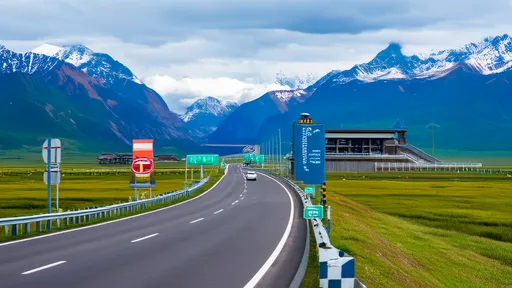
The necessity of a permit is determined by your specific destination. Not every town or county near the western borders requires one. Generally, you will need a permit if your itinerary includes areas within the Tibet Autonomous Region, certain prefectures in Xinjiang such as Kashgar, parts of Inner Mongolia bordering Mongolia and Russia, and regions in Yunnan and Guangxi that share a border with Myanmar, Vietnam, and Laos. It is absolutely crucial to verify the latest requirements with a reputable travel agency or by consulting official government notices, as the list of restricted areas can change with little public notice based on the current political and security climate.
For foreign passport holders, the process of acquisition is notably more complex than for Chinese nationals. Individual applications are typically not accepted from foreigners. The standard and most reliable method is to arrange your travel through a licensed Chinese travel agency. The agency will handle the application on your behalf, which involves submitting your passport details, travel itinerary, and sometimes a letter of invitation to the local Public Security Bureau (PSB) in the region you wish to visit. This process can take anywhere from several days to a few weeks, so it must be factored into your planning well in advance. You cannot apply for a Tibet Permit, for instance, from outside of China; it must be processed within the country, usually from a gateway city like Chengdu or Xining.
Chinese citizens have a more straightforward path, though it still requires effort. They can apply directly at the local PSB in their city of household registration (hukou). In some major cities like Beijing and Shanghai, non-residents may also apply if they can provide proof of long-term employment and residence. The required documents usually include a completed application form, the original national ID card, passport-sized photos, and sometimes a letter from an employer. The approval is often quicker than for foreigners, but advance application is still strongly advised.
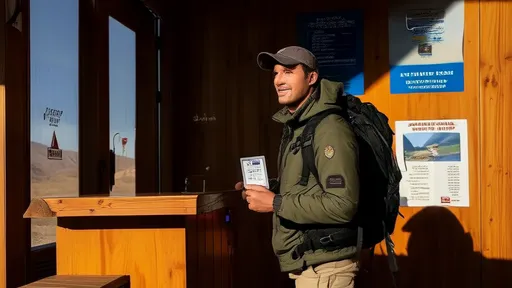
Once in your possession, treating your permit with the same level of care and importance as your passport is non-negotiable. Security checks are frequent along highways and at the entrances to towns and specific scenic spots. Officers will ask to see both your passport (for foreigners) or ID card (for citizens) and your original Border Permit. Photocopies or digital photos on your phone are almost never accepted. Furthermore, your permit is often issued for a specific travel agency, travel group, and a very explicit itinerary and time frame. Straying from the approved route or overstaying the validity period can lead to fines, deportation from the area, and potential difficulties in obtaining future permits.
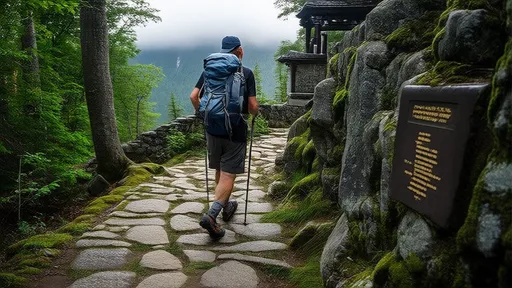
The journey itself through these borderlands is unlike any other travel experience in China. You will witness landscapes of epic scale and profound beauty, from the otherworldly blue lakes of Tibet to the ancient Silk Road cities of Xinjiang. You will interact with diverse ethnic communities, including Tibetan, Uyghur, Mongolian, and Dai peoples, each with their own unique traditions, languages, and cuisines. This travel privilege, however, comes with a responsibility to be a respectful and mindful visitor. The political and social dynamics in some of these regions are delicate. It is imperative to be aware of local customs and sensitivities, avoid discussing politically charged topics, and always ask for permission before photographing people, especially monks or military installations (which is often prohibited entirely).
Despite the bureaucratic hurdles, the reward is access to a part of China that remains off the beaten path for most of the world. Standing in the shadow of Mount Everest in Tibet, exploring the ruins of Gaochang in the Taklamakan Desert, or riding horseback across the grasslands of Inner Mongolia are experiences that resonate deeply. The Border Permit, therefore, should not be viewed merely as a bureaucratic obstacle but as a key—a key that unlocks these remote and powerful corners of the country. Proper planning, patience with the process, and respectful conduct during your travels will ensure that your journey to China's western frontiers is not only compliant with regulations but also a truly transformative and unforgettable adventure.

By /Aug 22, 2025

By /Aug 22, 2025

By /Aug 22, 2025

By /Aug 22, 2025

By /Aug 22, 2025

By /Aug 22, 2025

By /Aug 22, 2025
By /Aug 22, 2025

By /Aug 22, 2025

By /Aug 22, 2025

By /Aug 22, 2025

By /Aug 22, 2025
By /Aug 22, 2025

By /Aug 22, 2025

By /Aug 22, 2025

By /Aug 22, 2025
By /Aug 22, 2025

By /Aug 22, 2025

By /Aug 22, 2025