In the bustling modern kitchen, where the whir of appliances forms the soundtrack to our culinary adventures, the high-performance blender has earned its place as an indispensable tool. From crafting silky smooth soups to pulverizing frozen fruit into creamy delights, its power is unmatched. However, this very power often comes with a significant and unwelcome byproduct: noise. The piercing, grinding roar can disrupt households, startle pets, and make early morning or late-night healthy concoctions a source of guilt rather than joy. For many, the quest for quieter blending has become a kitchen priority, leading to a search for simple, effective solutions that don't require a degree in acoustical engineering.
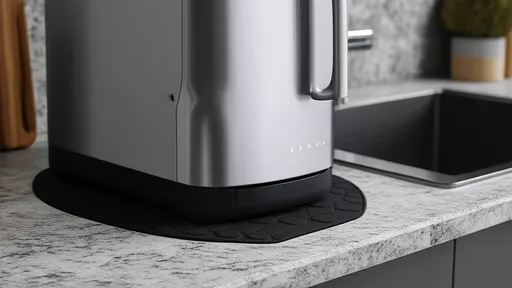
Amidst various technical and often expensive suggestions, one method stands out for its elegant simplicity and remarkable effectiveness: the humble rubber anti-slip mat. This common household item, often found lining kitchen drawers or under area rugs, holds the key to significantly dampening the disruptive clamor of a high-speed blender. The principle behind this is not rooted in complex soundproofing technology but in the fundamental physics of vibration and resonance, making it an accessible fix for anyone.
The core of the noise problem lies in vibration. When a blender's powerful motor engages, spinning blades at tremendous speeds to crush ice and fibrous foods, it generates intense vibrations. These vibrations travel directly from the motor base into the countertop surface. The countertop, typically made of hard materials like granite, quartz, laminate, or wood, acts as a perfect sounding board. It doesn't absorb this vibrational energy; instead, it amplifies it, transmitting the sound waves efficiently throughout the entire structure of the kitchen and beyond. This is why a blender can sound so much louder than it actually is—the countertop is essentially becoming a large speaker diaphragm, broadcasting the noise far and wide.
This is where the rubber anti-slip mat performs its minor miracle. By placing a mat between the blender's base and the countertop, you introduce a critical barrier. Rubber is a viscoelastic material, meaning it possesses both viscous and elastic properties. When the blender's vibrations hit this rubber layer, the material absorbs a substantial portion of that kinetic energy. It does this by deforming slightly, converting the vibrational energy into a minuscule amount of heat through internal friction, a process known as damping. Instead of being transferred cleanly into the countertop to be amplified, the energy is dissipated and trapped within the mat itself.
The effectiveness of this hack is not merely anecdotal; it is supported by basic principles of acoustics. The mat acts as an acoustic decoupler, breaking the direct physical path that sound vibrations use to travel. It creates a discontinuity between the vibrating appliance and the resonating surface, preventing the efficient transfer of energy. Furthermore, the mat adds mass to the system. A heavier object is harder to set into motion, so the added mass of the mat (however small) helps to inertially isolate the blender, requiring more energy to vibrate the entire unit. The combination of damping, decoupling, and added mass results in a noticeably quieter operation. The character of the sound itself changes from a loud, low-frequency rumble and grind to a higher-pitched, contained whir that is far less intrusive and travels a much shorter distance.
For optimal results, the choice of mat matters. A dedicated, dense rubber appliance mat is ideal, but a high-quality sink mat or a piece of a yoga mat can work in a pinch. The key is thickness and density; a mat that is too thin or flimsy will not provide sufficient damping. Aim for a thickness of at least a quarter of an inch. Simply cut it to a size slightly larger than the blender's footprint to ensure stability. Before each use, place the mat on a clean, dry section of the countertop and set the blender firmly on top of it. The anti-slip properties are a crucial bonus, as they prevent the blender from "walking" across the counter during high-power operation, which is both a safety hazard and another source of noise from the base rattling against the surface.
While the rubber mat is a superstar in the DIY noise-reduction world, its effects can be compounded by adopting a few other quiet-blending habits. Consider the location of your blender. Positioning it on a countertop that is firmly attached to walls and cabinets will resonate less than one on a freestanding island. Blending smaller batches for shorter durations also reduces the overall noise output. Furthermore, many modern blenders come with sound-dampening enclosures or specially designed lids; ensuring the lid is securely locked in place is a simple step that prevents noise from escaping from the top of the pitcher. For the ultimate quiet experience, placing the blender on the rubber mat in a corner where two walls meet can help contain the sound waves that do escape.
Adopting this simple practice of using a rubber mat transforms the blending experience. It shifts the appliance from a disruptive force to a more integrated, neighborly part of the kitchen environment. It allows for the creation of healthy meals and treats at any hour without the accompanying auditory assault. This solution empowers users to take control of their kitchen acoustics with a tool that is inexpensive, readily available, and incredibly effective. It proves that sometimes, the most sophisticated solutions are not found in complicated gadgets, but in understanding the simple physics of our everyday environment and using clever, practical interventions to create a more harmonious home.

By /Aug 20, 2025

By /Aug 20, 2025
By /Aug 20, 2025

By /Aug 20, 2025

By /Aug 20, 2025

By /Aug 20, 2025

By /Aug 20, 2025

By /Aug 20, 2025

By /Aug 20, 2025

By /Aug 20, 2025

By /Aug 20, 2025
By /Aug 20, 2025

By /Aug 20, 2025

By /Aug 20, 2025

By /Aug 20, 2025

By /Aug 20, 2025

By /Aug 20, 2025

By /Aug 20, 2025

By /Aug 20, 2025
By /Aug 20, 2025