In the quiet hum of kitchens worldwide, a culinary revolution is brewing, one pot of water at a time. For generations, the act of boiling pasta has been relegated to a simple, almost thoughtless step—a mere prelude to the saucing and seasoning. A pot, some water, a pinch of salt, and a hopeful dash into bubbling oblivion. The result? Too often, a clumpy, sticky, or even gummy disappointment that no amount of rich ragù or fragrant pesto can truly salvage. The hidden culprit behind these textural tragedies is rarely the quality of the semolina or the brand of the pasta; it is, almost universally, a profound and widespread misunderstanding of the most fundamental element: the water itself.
The standard advice found on the backs of countless pasta boxes is notoriously vague, often suggesting a "large pot of water" or something equally unhelpful. This leaves the home cook to guess, often erring on the side of caution with a pot that is, frankly, too small for the job. The consequences of this underestimation are dire. Insufficient water means the moment the pasta hits the pot, the temperature of the water plummets. It takes precious extra time to return to a vigorous boil, during which the pasta begins to leach its starches into a small, concentrated volume of water. This creates a thick, soupy, glue-like bath that the noodles then continue to cook in. The starches coat the surface, preventing sauce from adhering later and causing the individual strands or shapes to stick to one another in a hopeless, congealed mass. The pasta essentially steams and stews in its own starchy runoff, rather than boiling freely in a vast, rolling sea.
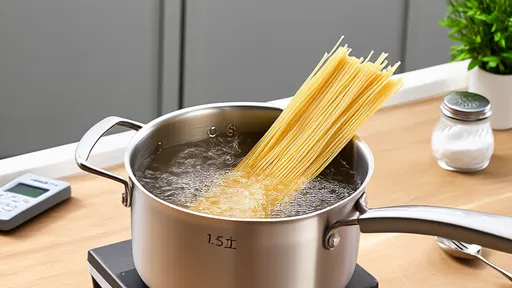
Enter a new, precise, and almost foolproof golden ratio that promises to change your pasta game forever: for every 100 grams of dried pasta, you need a minimum of 1.5 liters of water. This is not a casual suggestion; it is a scientific prescription for perfection. This specific volume is calculated to provide a thermal mass so significant that the addition of room-temperature pasta causes only a negligible drop in temperature. The boil is maintained almost instantly, ensuring the pasta cooks quickly and evenly from the second it is submerged. More critically, this immense quantity of water acts as a vast dilution tank for the starches. As the pasta releases its natural carbohydrates, they are immediately dispersed into a huge body of water, preventing the concentration that leads to stickiness and gumminess. The noodles are allowed to move and dance freely in the roiling water, ensuring they cook uniformly without clumping together. The result is pasta that is perfectly al dente, with a clean, distinct surface texture that is primed to grab onto and hold whatever sauce you pair it with.
Adopting this standard requires a shift in mindset. It means reaching for your largest stockpot, the one you might use for making soup for a crowd, even when you are just cooking for two. It means ignoring the little voice that says it's a waste of water or energy (the rapid boil time and superior results justify it). The process becomes simple: bring your copious amount of water to a raging, rolling boil—the kind that doesn't falter when you add the pasta. Salt it generously *after* it boils; salting cold water can slow the heating process and potentially pit the bottom of your pot. Then, add your measured 100g of pasta, give it one swift stir to ensure all pieces are separated and submerged, and let the vast, energetic water do its work. You will witness the difference immediately. The water remains relatively clear, not cloudy and thick. The pasta pieces swirl independently. The timer dings, and you drain, revealing perfectly separate, ideally textured noodles every single time.
This is more than a mere cooking tip; it is a fundamental principle that separates adequate home cooking from true culinary excellence. It is the difference between a dish where the pasta is a gluey afterthought and one where it is the celebrated star, providing the perfect textural counterpoint to your sauce. It is the secret weapon of Italian nonnas and Michelin-starred chefs alike, who understand that greatness is built on foundations, even ones as simple as water and flour. By embracing the 1.5-liter rule, you are not just boiling pasta; you are engineering an outcome. You are ensuring that your carbonara remains creamy without becoming pasty, that your spaghetti aglio e olio is slick and slippery, not stodgy, and that your baked ziti has distinct layers, not a monolithic block. You are honoring the ingredient and the craft.
So, the next time you set out to create a simple weeknight meal or an elaborate weekend feast, start with the foundation. Arm yourself with a large pot and a measuring jug. Remember the magic number: 1.5 liters per 100 grams. You will be rewarded with pasta that is never sticky, never糊 (hú - gummy), and always, impeccably, perfect. It is a small change in process that yields a monumental leap in quality, transforming the most basic of pantry staples into a masterpiece of texture and taste. The path to pasta perfection is clear, and it is filled with water.
By /Aug 20, 2025
By /Aug 20, 2025
By /Aug 20, 2025

By /Aug 20, 2025
By /Aug 20, 2025
By /Aug 20, 2025

By /Aug 20, 2025
By /Aug 20, 2025
By /Aug 20, 2025
By /Aug 20, 2025
By /Aug 20, 2025
By /Aug 20, 2025

By /Aug 20, 2025
By /Aug 20, 2025
By /Aug 20, 2025
By /Aug 20, 2025

By /Aug 20, 2025
By /Aug 20, 2025
By /Aug 20, 2025
By /Aug 20, 2025