In the quiet hum of household management, few disruptions are as universally frustrating as an unexpected water outage. Whether due to municipal maintenance, infrastructure failure, or unforeseen emergencies, the sudden absence of running water brings daily routines to a grinding halt. Among the most immediate and greasy challenges is the pile of dirty dishes accumulating in the sink. The conundrum of cleaning without a steady stream of water seems insurmountable, a puzzle that demands both ingenuity and practicality. It is within this domestic dilemma that a surprisingly effective and elegantly simple solution has emerged from the pantries of the resourceful: a powerful duo of wet wipes and baking soda.
The concept is born not from complex chemistry, but from a fundamental understanding of basic cleaning agents and their interactions with grime. Baking soda, or sodium bicarbonate, is a staple whose reputation extends far beyond its leavening duties in baking. Its mild alkalinity makes it a gentle yet effective abrasive and a potent degreaser. On its own, it can tackle light soil, but its true potential is unlocked when combined with a medium that allows for application and mechanical action. This is where the humble wet wipe enters the stage. Often relegated to personal hygiene or quick surface wipes, its pre-moistened, textured fabric becomes the perfect vehicle for delivering the cleaning power of baking soda to a greasy plate.
The beauty of this method lies in its stark simplicity and immediate accessibility. The required materials are not specialized, expensive, or difficult to procure. A container of basic baking soda is a common sight in most kitchens, and wet wipes, in various forms, are a standard item in many households. There's no need for advanced preparation, no mixing of dangerous chemicals, and no special equipment. When the taps run dry, the solution is often already within arm's reach, turning a moment of panic into one of manageable action. This accessibility is its greatest strength, making it a viable option for nearly anyone, anywhere.
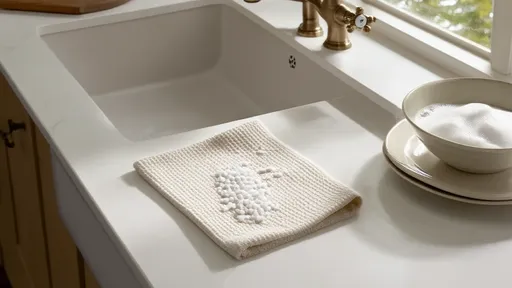
Engaging in the process reveals its intuitive logic. A small amount of baking soda is sprinkled directly onto the surface of a soiled dish, concentrating on areas with baked-on food or stubborn oily residues. The coarse granules immediately begin to work, absorbing fats and breaking the bond between the food and the surface. Then, a wet wipe is taken and used to scrub the pasty mixture across the plate. The texture of the wipe provides the necessary abrasion without being so harsh as to scratch delicate surfaces like non-stick coatings or fine china. The moisture from the wipe dissolves the baking soda just enough to form a mildly abrasive paste, while the surfactants already present in many wet wipes boost the cleaning action, helping to emulsify and lift away the grease.
The chemical and mechanical dance that occurs is a fascinating study in practical science. Fats and oils are hydrophobic, repelling water and making them difficult to rinse away without the aid of soap. Baking soda disrupts this. Its alkaline nature helps to saponify fats—a process where fats are turned into soap—making them soluble in water and much easier to remove. Meanwhile, the physical scrubbing action dislodges particulate matter. The wet wipe acts as both applicator and rinsing agent in one; it spreads the paste and then, as it becomes soiled, it effectively wipes the now-loosened grime away, leaving a surprisingly clean surface behind. For heavier loads, the wipe can be discarded and a new one used, preventing the redeposition of dirt.
Beyond mere effectiveness, this approach offers significant practical advantages, especially in a true water-scarce scenario. The most obvious is the minimal water usage. Traditional dishwashing, even when conscientious, can consume gallons of water between pre-rinsing, soaping, and final rinsing. This method requires no running water at all. The only moisture introduced is the negligible amount contained within the wet wipes themselves. This makes it an exceptionally water-conserving technique, ideal for drought conditions, camping, RV use, or any situation where water is a precious commodity. Furthermore, it is a contained and relatively clean process. There is no splashing, no filled, dirty sink basin, and thus, less overall mess to manage in a kitchen that already lacks its most vital utility.
However, no solution is without its considerations. The environmental impact of using disposable wet wipes is a valid concern for many. While effective in a pinch, a reliance on this method for extended periods would generate non-biodegradable waste. For the eco-conscious, seeking out wipes made from natural, biodegradable fibers like bamboo or cellulose can mitigate this issue. Alternatively, one could use a reusable cloth dampened with a small amount of water, though this slightly defeats the "no water" premise of the emergency. Another point is that while excellent for grease and general food residue, this method may struggle with extremely baked-on or starchy foods that typically require soaking. In such cases, a preliminary scrape is highly recommended.
When placed alongside other water-free cleaning methods, the wet wipe and baking soda combination holds its own. It is certainly more targeted and less wasteful than using a plethora of paper towels and spray cleaners. It is safer and more pleasant than using harsh chemical gels without water for rinsing. Compared to simply letting dishes accumulate until the water returns—a practice that invites pests and bacteria—it is undoubtedly the superior hygienic choice. It strikes a remarkable balance between efficacy, convenience, safety, and resource conservation.
Ultimately, the wet wipe and baking soda hack is more than just a clever trick for a water outage. It is a testament to practical problem-solving, a reminder that often the most powerful solutions are built from the simplest, most humble ingredients. It empowers individuals to regain control in a disruptive situation, transforming a mountain of dirty dishes from an overwhelming problem into a manageable task. It underscores a broader principle of preparedness: innovation isn't always about inventing something new, but about understanding the latent potential in the ordinary tools we already have at our disposal. So, the next time the water pressure drops to zero, there's no need for dismay. A box of baking soda and a pack of wipes might just be the heroes your kitchen sink deserves.
By /Aug 20, 2025
By /Aug 20, 2025
By /Aug 20, 2025
By /Aug 20, 2025
By /Aug 20, 2025
By /Aug 20, 2025

By /Aug 20, 2025

By /Aug 20, 2025
By /Aug 20, 2025
By /Aug 20, 2025

By /Aug 20, 2025
By /Aug 20, 2025

By /Aug 20, 2025
By /Aug 20, 2025
By /Aug 20, 2025

By /Aug 20, 2025

By /Aug 20, 2025

By /Aug 20, 2025

By /Aug 20, 2025
By /Aug 20, 2025